
A week ago I found myself stepping into the Getty residence in South Williamsburg. I had to reorientate myself when I got off the ferry stop. It was not my first time in Williamsburg, actually, I frequented the area when I was in high school. The allure of hippie and alternative thrifts like The Beacon’s Closet and Buffalo Exchange, though now expensive and overrun, were my favorite places to find obscene t-shirts, like surfers fucking whilst riding the face. I used to drag my friend Reggie with me, and as I picked out my surfer tee, I vividly remember him telling me I will regret buying it. Years later, it’s still in my wardrobe rotation, though I can’t tell if I kept it because I love it or I love proving Reggie wrong more.
When I arrived at S 5th street, I realized that the same spot I used to hang out at, right under the bridge, now expanded into a larger section of Domino Park. The park, designed by the same architects for the High Line, James Corner Field Operations, took six years to come into fruition. Opened in 2018, when I was a freshmen in high school, Domino Park was exciting the first three times I came. I haven’t been back since. Not until I came to the Getty residence. Yes, Getty as in Getty Images. Also yes, Getty as in The Getty Museum in Los Angeles, California. But perhaps most notably, yes, Getty as in the American oil tycoon J. Paul Getty, who infamously left his grandson to rot when ransomers kidnapped him. There’s a movie inspired by these events starring Michelle Williams and Mark Wahlberg called, “All the Money in the World.” (2017) J. Paul Getty, another real-life example of Logan Roy, left billions of dollars to his future heirs when he died in 1976. But the money didn’t start there. J. Paul Getty is the son of George Getty, a successful and independent oilman who lent his son $10,000 (equivalent to today’s $350,000) to invest in oil. Since then, J. Paul Getty established the world’s wealthiest art institution as well as numerous foundations and corporations, and on top of that, fathered many, many children. When asked about his kidnapped grandson, John Paul Getty III, J. Paul Getty said, “I have thirteen other grandchildren.”
The Getty family is a quintessential example of the “1%.” When the masses chant “eat the rich,” it’s the Gettys who are spread out on the dinner table. Philanthropists or not, the Gettys have generational wealth that many of us cannot even begin to understand, let alone experience. Millions and millions of untaxed, secure income through investment trusts (basically an investment company) make the Gettys seemingly untouchable; living above the means that regular, every day hard-working Americans will never reach. The Gettys rent a 53rd floor apartment for $15,000 a month just to —and get this— leave it completely uninhabited. Yes, you read that correctly. No one currently lives at the Getty residence, which is probably the only way someone like myself could ever get inside.
So, what was I doing there? Relax, I am not a class traitor. Like the experienced hand-second conessoisseur I am, I was following a lead that a rich lady in Brooklyn was giving away her stuff. To my curious readers also interested in dumpster diving in rich people’s yards, I give one piece of advice to finding the money: first find the help. Dog walkers, baby-sitters, and cleaners are the not-so-secret windows to the rich life.
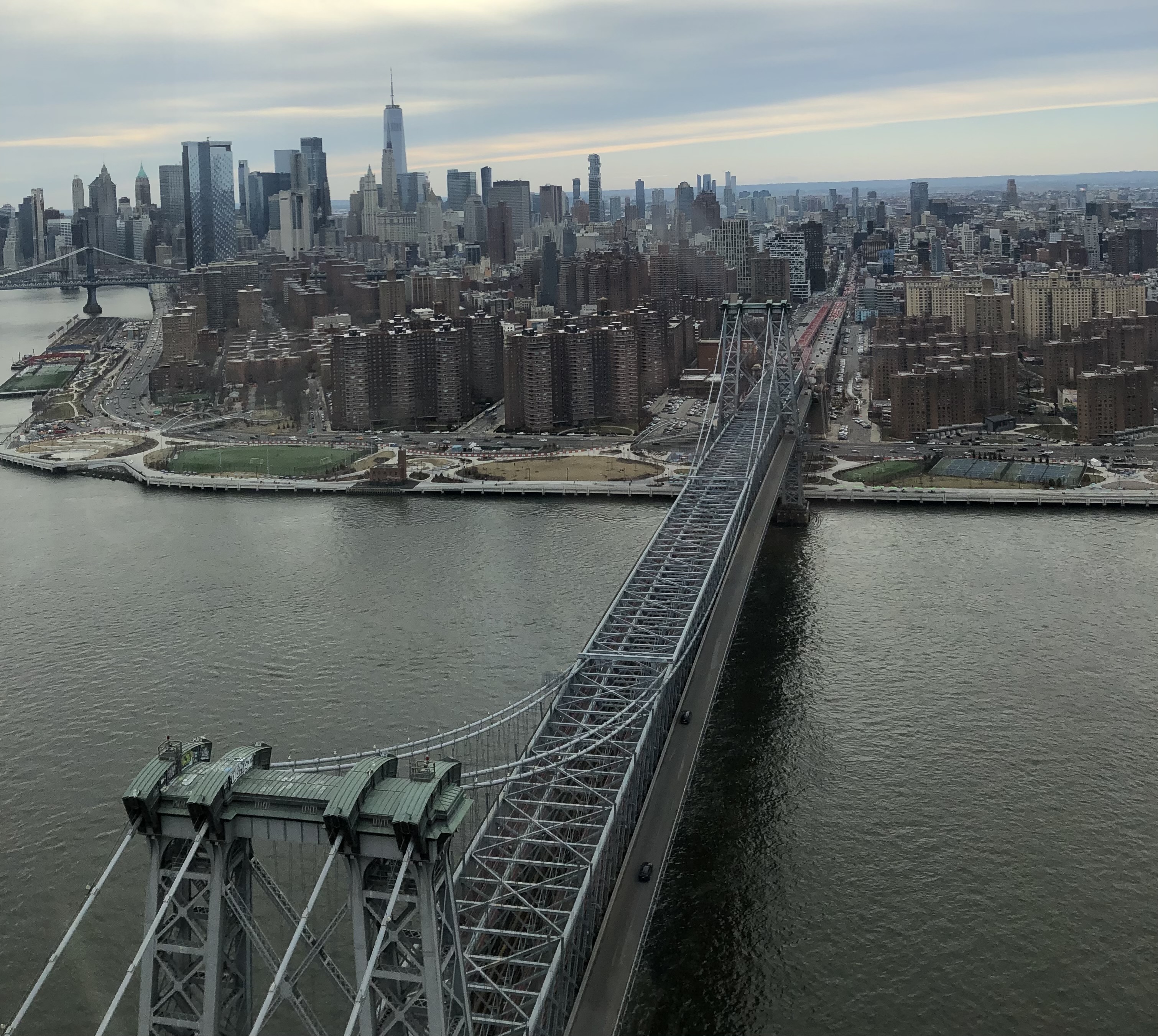
The first thing I noticed when I entered the apartment was the view. The second thing you notice is how hot it is. It must have been over 80 degrees in the apartment, which made sense seeing as the entire apartment is wrapped around glass windows looking across towards LES. I could see the Citibikers zipping through the bike lane on the Williamsburg Bridge, as well the M or the J subway cutting right through the middle.

There was a lot of stuff to comb through. Everything between pedicure basins, paintings, couches, loveseats, carpets, and millions of kitchen utensils and pink heart-shaped dinner plates, to unopened cans and bags of dog food (the dog, by the way, was rehomed after moving). I mean, the list is endless. It was like sorting through an entire flea market. From expensive tomato paste to mini food processors, to decorative plates, each costing almost $20 bucks. Purses, bags, shoes, some with tags still on it. If they left all this, I could only imagine what they decided to take with them.
A sickening question came to me as I was sorting out what I wanted to take. Is it possible to feel bad for a billionaire? Does a slave feel bad for a freeman? Does the plebeian feel bad for the patrician? The serf to the lord? The oppressed to the oppresser? Here is this family that will never have to work a day in their lives. This is true; no one in the Getty residence has a “job” aside from being a member of the Getty family. They inherited the money, does that make them immoral? No. Are they inherently evil? No. Yet, their existence is immoral.
I am reminded of a book by Roman poet and philosopher Lucretius, “The Nature of Things.”
To rise untrammelled to the peaks of power-
These wounds of life in no mean part are kept
Festering and open by this fright of death.
For ever we see fierce Want and foul Disgrace
Dislodged afar from secure life and sweet,
Like huddling Shapes before the doors of death.
And whilst, from these, men wish to scape afar,
Driven by false terror, and afar remove,
With civic blood a fortune they amass,
They double their riches, greedy, heapers-up
Of corpse on corpse they have a cruel laugh
For the sad burial of a brother-born,
And hatred and fear of tables of their kin.
Likewise, through this same terror, envy oft
Makes them to peak because before their eyes
That man is lordly, that man gazed upon
Who walks begirt with honour glorious,
Whilst they in filth and darkness roll around;
Some perish away for statues and a name,
And oft to that degree, from fright of death,
Will hate of living and beholding light
Take hold on humankind that they inflict
Their own destruction with a gloomy heart-
Forgetful that this fear is font of cares,
This fear the plague upon their sense of shame,
And this that breaks the ties of comradry
And oversets all reverence and faith,
Mid direst slaughter. For long ere to-day
Often were traitors to country and dear parents
Through quest to shun the realms of Acheron.
For just as children tremble and fear all
In the viewless dark, so even we at times
Dread in the light so many things that be
No whit more fearsome than what children feign,
Shuddering, will be upon them in the dark.
This terror, then, this darkness of the mind,
Not sunrise with its flaring spokes of light,
Nor glittering arrows of morning sun disperse,
But only Nature’s aspect and her law.
According to Lucretius, the fear of death is what causes people to accumulate wealth and power. That accumulation becomes grotesque, irrational, and excessive especially when it’s combined with boredom. Becoming a billionaire, or rather in this case, being born a billionaire, does not bring peace or solace to the mind. The mind, I believe, is more essential to life than the soul. The mind and soul are subject to birth and death. “The mind is born with the body, develops with it, and declines with it.” The mind feels pain and is therefore mortal. It is affected by the body and can be cured by medicine. The mind cannot exists without the body and both must live in union. The soul suffers dissolution at death. “Divorced from the body, the soul cannot have either eyes or nose or hands or tongue or ears, and therefore cannot possess either sentience or life.” If the soul were immortal, we should have some recollection of our earlier existence, which we do not.
The accumulation of excessive material possessions becomes detached from their use. Do I feel bad for the Gettys? No, not really. But I can see how wealth and money still have people trapped in a fear-driven system. Even with infinite money, no need to work, and total insulation and security, the human condition is inescapable. When the fear of survival is taken away, what remains for the billionaires is emptiness, detachment and excess. For many years, I thought becoming wealthy would provide a way towards “freedom.” Now I understand that liberation, both external and internal, requires humility, an acceptance of our mortality, and a clear-sighted understanding of nature—because without confronting the fear of death, no amount of wealth can free us from the illusions that bind the mind.